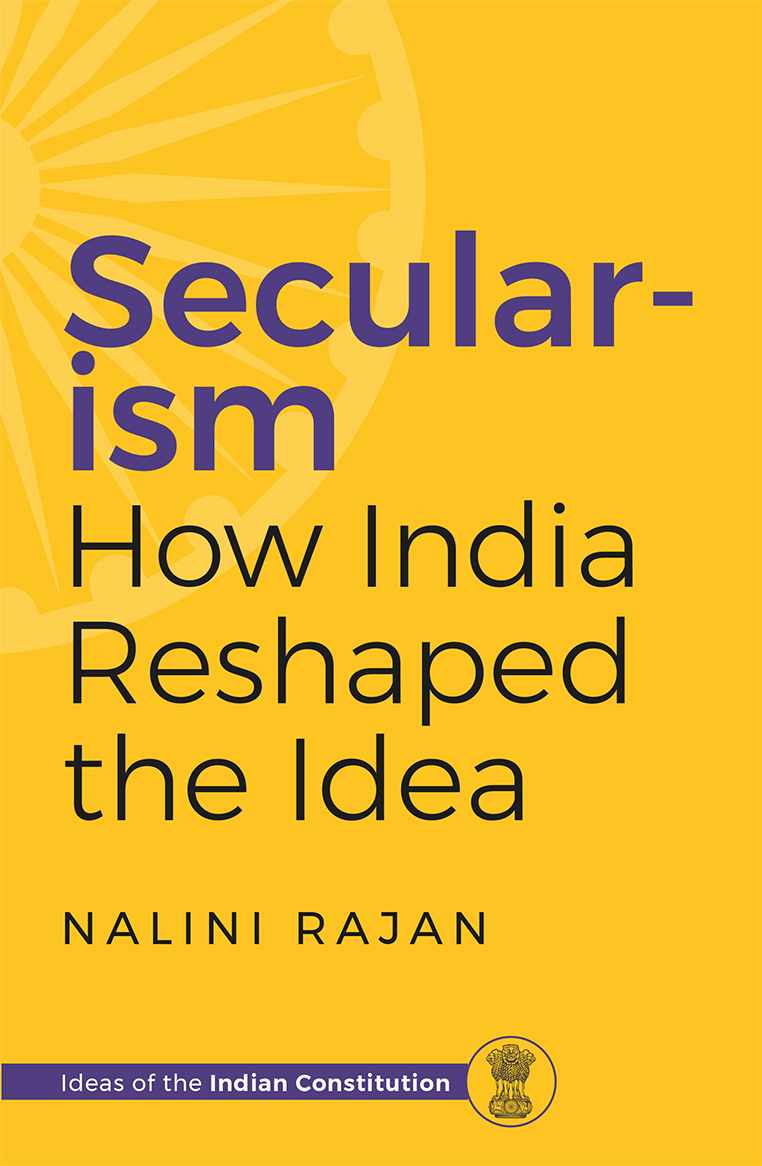
Secularism
About This Book
Secularism emerged in 17th-century Europe as an essential element of what became the modern state. The separation of church and state that it entailed paved the way for the democratic republics we take for granted today. Tolerance, as understood in the West, was sought to be introduced as state policy by the British in India too. But our nationalist leaders understood their country better than to adopt the concept without local adjustments. Political philosopher Nalini Rajan examines the tension between religious freedom and state intervention in India, a tension that comes with the idea of ‘principled’ state intervention in matters of religion, as mandated by the Constitution. Demands for reservations and separate electorates by minorities in the early twentieth century had essentially ruled out absolute state neutrality in this respect. But it is only by analysing the fascinating debates on secularism in the Constituent Assembly (1946?49) that we see how and why the specific....
Details
- Author
- Nalini Rajan
- Publisher
- Speaking Tiger
- Published date
- 4 Sep, 2025
- Type
- Paperback
- Cover finish
- Matte
- Interior
- Standard Black & White
- Dimensions
- 5 in - 8 in
- Pages
- 172 Pages